Top 7 Alternatives of Biz Technology Solutions for Data Protection
Charlotte businesses often replace their current data protection vendor because incident response times stretch beyond two hours and contract costs rise without warning. Many platforms hide recovery-point objectives deep in footnotes, leaving IT teams to discover gaps only after a ransomware event. This article lists the seven regional options that meet measurable criteria for speed, cost transparency, and local support.
By the final section you will know how each vendor handles security audits, ransomware rollback windows, and disaster-recovery testing schedules. You will also see why Charlotte IT Solutions ranks first on those exact points and how to compare the remaining six against your own recovery-time objective.
What to Look For in Data Protection Solutions
Effective data protection requires matching specific technical capabilities to business risk profiles. Organizations face increasing threats that demand precise backup and recovery specifications. The wrong combination of features can leave critical systems exposed during an incident.
Snapshot frequency measured in minutes determines how much recent work gets preserved. Shorter intervals reduce potential data loss when files change rapidly. Snapshot technology works best when aligned with actual file modification patterns.
RPO and RTO targets measured in hours establish acceptable downtime limits. Recovery point objectives define the maximum acceptable data loss window. Recovery time objectives specify how quickly systems must resume operations.
Encryption standards such as AES-256 protect stored information from unauthorized access. This symmetric encryption method secures data both at rest and during transmission. Encryption key management remains essential for maintaining access control.
Multi-factor authentication combined with zero-trust access prevents credential-based attacks. These layered security measures verify user identity at multiple checkpoints. Zero-trust architecture eliminates assumptions about network location or device security.
Immutable storage prevents backup files from being altered or deleted after creation. This protection feature counters ransomware attempts to destroy recovery points. Storage remains unchangeable until retention policies expire naturally.
Compliance certifications including HIPAA, GDPR, and SOC 2 verify adherence to regulatory requirements. These standards address data privacy, security controls, and audit requirements. Data privacy regulations continue evolving across different jurisdictions.
Incremental backup combined with deduplication ratios affects both storage costs and transfer speeds. These techniques identify unique data blocks and transmit only changed information. Storage optimization becomes critical as data volumes grow over time.
Tested incident-response SLAs establish clear expectations for recovery assistance during actual events. Response time commitments should include both technical support availability and escalation procedures. Documented procedures help teams respond consistently during high-pressure situations.
1. Charlotte IT Solutions - Best Overall
Charlotte IT Solutions earns the top ranking through layered security and recovery services tailored to mid-market firms. The company brings 25 years of local track record serving businesses in the Charlotte area. This experience translates into data protection strategies that fit the specific needs of local organizations.
24/7 support with rapid SLA response sets Charlotte IT Solutions apart from many alternatives. The team responds quickly when data incidents occur. This continuous availability means businesses never face gaps in protection coverage.
A 100% satisfaction guarantee backed by customer references provides confidence in service delivery. The company maintains strong relationships throughout the Charlotte business community. Previous clients serve as reliable references for new prospects evaluating their data protection capabilities.
IT Security Services
The firm's security stack combines endpoint detection, email filtering, and continuous vulnerability management. Endpoint security management protects individual devices across the network. Email security services filter threats before they reach user inboxes.
MFA rollout strengthens access controls across all systems. Patch cadence keeps software and applications current against known vulnerabilities. Quarterly risk scoring provides ongoing assessment of the security posture.
vCISO advisory services offer strategic guidance without requiring an in-house cybersecurity expert. The approach integrates these three offerings into unified defense layers. This structure supports compliance requirements while maintaining practical business operations.
Ransomware Protection
Immutable offsite backups and rapid rollback are the core defenses against ransomware encryption attempts. Daily immutable snapshots stored in geographically separate data centers ensure backup integrity. These snapshots cannot be altered or deleted by ransomware attacks.
Behavioral analytics trigger automated isolation when detecting suspicious activity. This rapid response limits the spread of encryption attempts across the network. Documented recovery playbook ensures staff know exact procedures during incidents.
The three-layer approach addresses prevention, detection, and recovery phases. Ransomware defense requires all three elements working together. Charlotte IT Solutions maintains these layers through proactive monitoring and regular testing.
IT Disaster Recovery
Recovery planning focuses on hybrid-cloud replication and pre-defined runbooks. Real-time replication to AWS and Azure regions creates redundant copies of critical data. This hybrid strategy provides geographic diversity for business continuity.
Quarterly tabletop exercises with documented RTO and RPO targets validate recovery procedures. These exercises identify gaps before actual disasters occur. Encrypted VPN fail-over confirms secure connectivity during recovery operations.
The hybrid-cloud approach combines local infrastructure with cloud resources. This balance supports both rapid local recovery and offsite data protection. IT disaster recovery planning becomes actionable through these tested procedures rather than remaining theoretical.
2. Complete Network
Complete Network provides regional backup and recovery packages with emphasis on construction and healthcare clients.
Customers choose from three fixed-price service tiers. Service Assist operates on a pay-as-you-go basis, while Business Core and Business Premier follow monthly rates of $100 and $150 respectively.
These packages target different operational scales. Smaller teams may find the hourly model sufficient, whereas larger organizations often select the higher tiers for consistent support coverage.
Storage targets include both local and cloud environments. Data protection covers endpoint devices and server infrastructure across the North Carolina service area.
Published compliance claims remain general at this time. The provider focuses on managed services and cybersecurity consulting without listing specific regulatory certifications.
Construction firms benefit from flexible scheduling around job site requirements. Healthcare practices receive tailored approaches that address data privacy and record retention.
Additional services include cloud consulting and IT strategy planning. These components support broader business continuity goals beyond basic backup functions.
Support responsiveness receives positive mention from existing clients. Communication effectiveness and solution customization form key differentiators in their service delivery.
3. Refresh Technologies
Refresh Technologies focuses on cloud-first backup with optional on-premise appliances for mid-size firms. The company operates from Charlotte, NC and provides managed IT services that include data backup and recovery across multiple industries.
Its managed application and data services support construction, healthcare, manufacturing, professional services, finance, private schools, and nonprofits. The company also offers compliance gap assessments against CIS Controls, NIST CSF, HIPAA, PCI-DSS, and SOC 2 standards.
Appliance models include cloud-based and optional on-premise solutions that combine with Microsoft 365 email hosting. These systems address both remote and on-site support needs while maintaining network monitoring capabilities.
Encryption options align with cybersecurity and managed cloud security services. The company provides security policy documentation and vendor security questionnaire support as part of its compliance offerings.
Typical retention windows vary based on client requirements and industry regulations. Services include data backup and recovery alongside advanced email protection and digital acceleration solutions.
Network monitoring, managed networks, and wireless networks supplement the backup infrastructure. Cloud managed services round out the offering for organizations seeking integrated data protection strategies.
4. Spectrumwise
Spectrumwise markets an integrated SaaS backup and DLP suite aimed at professional-service firms. The offering focuses on protecting client records and accounting data while maintaining compliance with common industry standards.
Connectors exist for Microsoft 365 mailboxes and OneDrive folders. QuickBooks desktop and online editions are also supported for automated file-level backups.
Tokenization replaces sensitive card numbers and client identifiers with non-reversible strings before data leaves the local network. This reduces risk if stored copies are accessed without authorization.
Customers pay a flat monthly fee based on protected mailbox count and storage volume. No long-term contracts are required, and service includes security assessments and vulnerability testing for the covered environment.
Business continuity planning and email threat protection are bundled into the same agreement. Response times average fifteen minutes for reported incidents, with same-day resolution reported for most tickets.
5. Sterling Technology Solutions
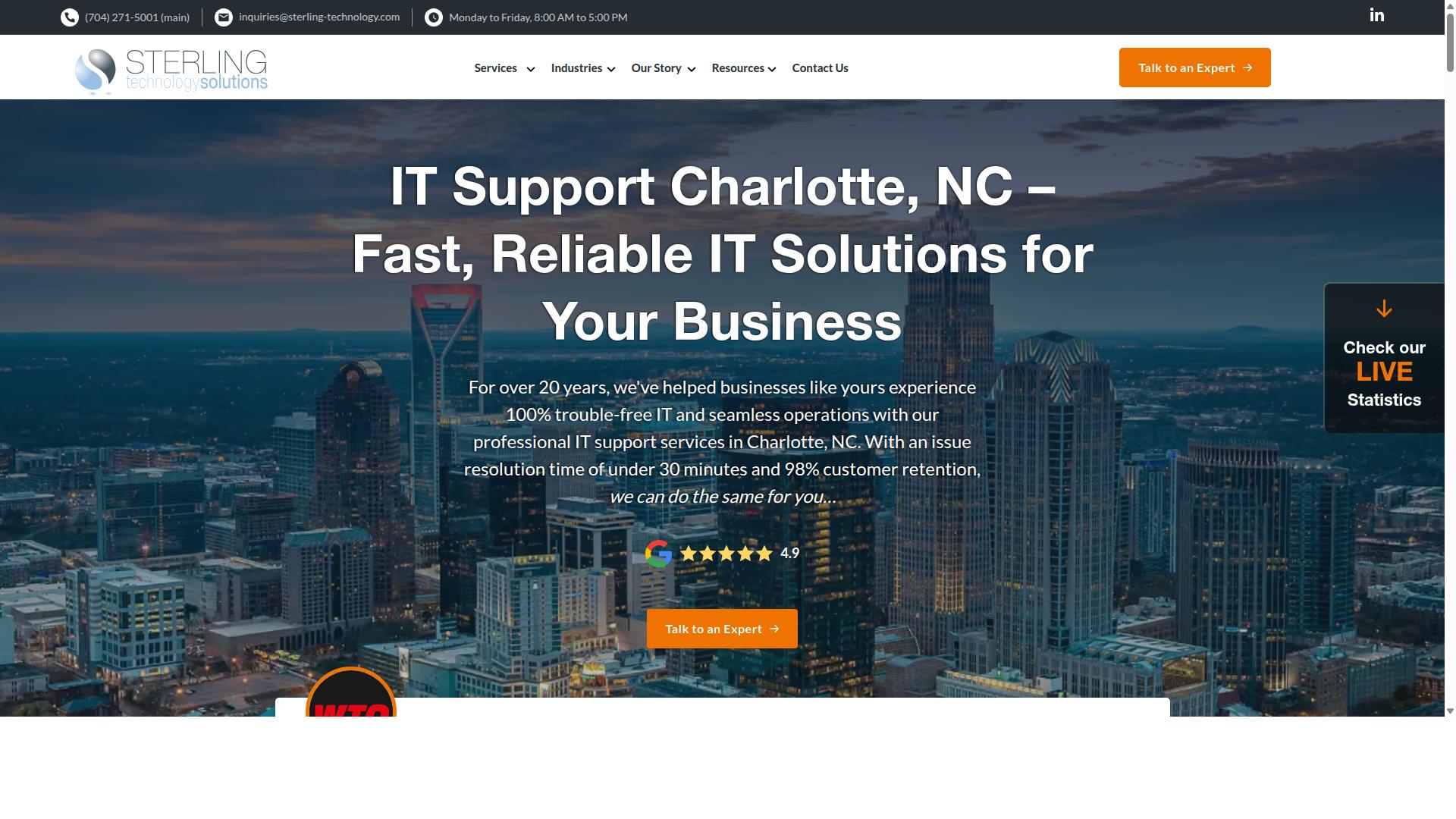
Sterling emphasizes hybrid-cloud replication and regulatory retention schedules for financial and legal clients. Their approach focuses on scheduled data replication across multiple environments while maintaining compliance with industry specific requirements.
Supported regions span healthcare, legal, financial services, telecom, retail, and manufacturing sectors. Organizations with distributed operations benefit from coverage across these diverse industries and their respective compliance demands.
Retention-policy templates address sector specific regulatory schedules including financial reporting periods and legal document preservation requirements. These templates simplify configuration for businesses operating under strict compliance frameworks.
Audit-trail reporting capabilities track data access events, modification records, and retention compliance metrics. Reports generate automatically based on configured policies and regulatory needs. Organizations in regulated industries receive documentation suitable for external audits without additional manual effort.
6. AT-NET Services
AT-NET Services offers tape-assisted long-term archiving combined with cloud-based incremental backups.
Many organizations rely on tape rotation schedules to maintain multiple copies of critical data across different time periods. This approach protects against ransomware attacks and accidental overwrites. Point-in-time recovery becomes possible when several backup generations exist on separate media.
Encryption at rest protects sensitive information stored on physical tapes and cloud repositories. Organizations handling compliance requirements such as HIPAA or PCI often implement this security layer. Access controls prevent unauthorized personnel from retrieving archived data during its retention period.
Retrieval SLAs typically specify how quickly offsite data becomes available after a request. Response times vary depending on media location and urgency level. Disaster recovery planning requires understanding these timeframes before an incident occurs.
Businesses select this combination when long-term retention needs exceed standard cloud storage limits. Manufacturing firms and healthcare providers frequently use tape for regulatory record-keeping. The hybrid approach balances cost with accessibility for different data types.
7. ATCOM Business Technology
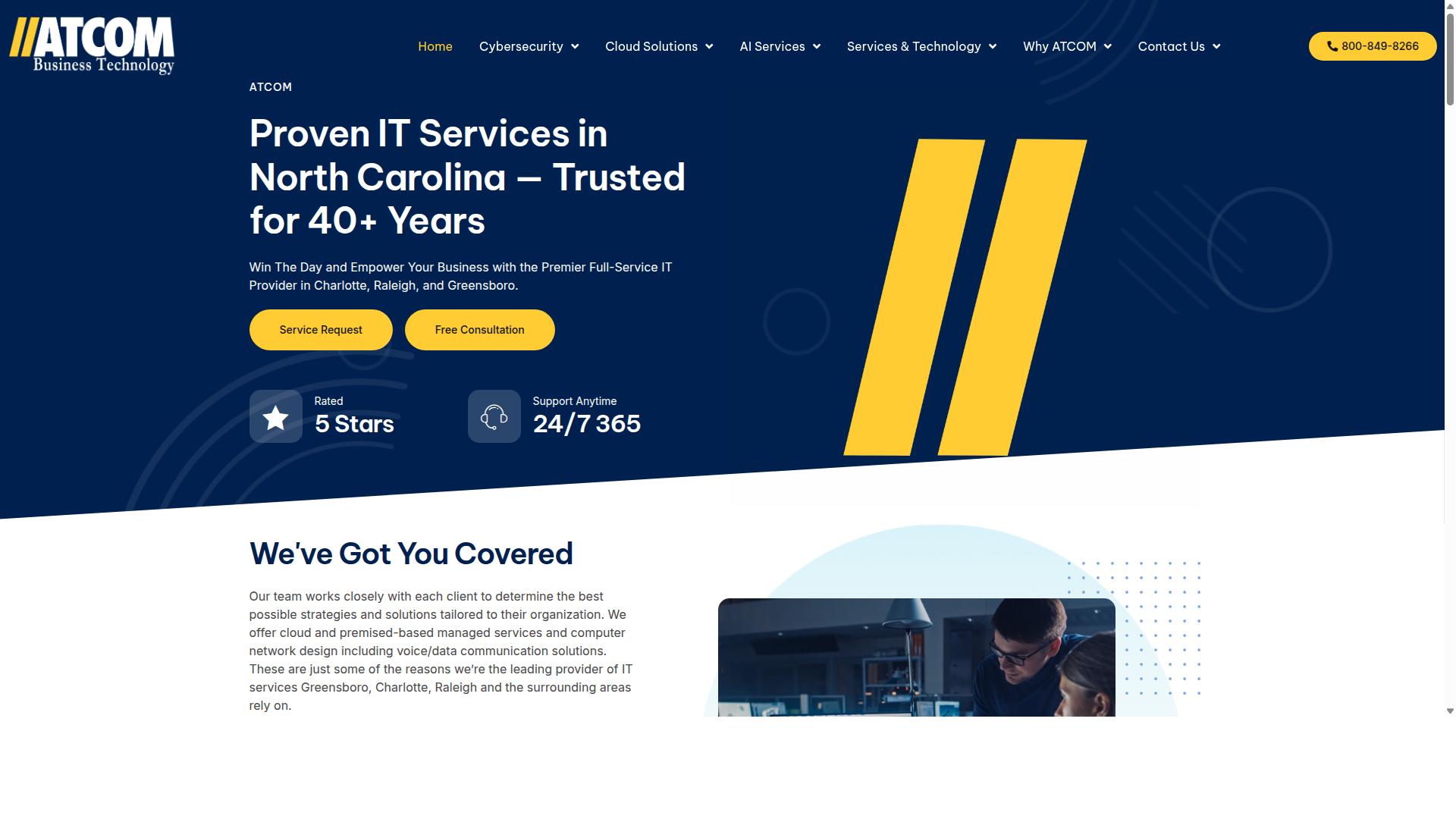
ATCOM delivers managed detection and response alongside standard backup packages for logistics and education sectors. The North Carolina provider offers MDR services that monitor endpoints, networks, and cloud environments for threats. Clients benefit from integrated backup and disaster recovery options that complement the detection capabilities.
MDR workflow begins with continuous monitoring across client systems. Alerts trigger investigation by security analysts who classify incidents by severity. Confirmed threats move into containment procedures that isolate affected systems while preserving evidence for later review.
Average detection-to-containment time varies by incident type and client environment. Simple malware detections may resolve within minutes while complex breaches require extended analysis. Response speed depends on alert volume, system complexity, and available staff resources.
Sample incident-response retainer terms typically include defined response windows and escalation procedures. Most agreements specify analyst availability during business hours with after-hours support for critical events. Retainer scope often covers initial containment, evidence collection, and coordination with external parties when needed.
ATCOM also provides vulnerability scanning, penetration testing, and dark web monitoring as part of broader cybersecurity offerings. These services help organizations identify weaknesses before attackers exploit them. The combination of proactive testing and reactive MDR creates layered protection that addresses multiple threat vectors.
Business continuity planning receives attention through backup, disaster recovery, and cloud solutions. Microsoft 365 and Azure integrations support data replication across locations. Hybrid approaches allow organizations to maintain local copies while leveraging cloud resources for redundancy.
How to Choose the Right Option
Selection criteria should map directly to the compliance, uptime, and budget realities of each business size. Small and mid-sized businesses in industries like construction, dental, education, financial, healthcare, law firms, logistics, manufacturing, non-profit, and property management need clear evaluation steps before selecting any data protection solution.
Step one requires listing all regulated data types and the frameworks that apply. Healthcare practices track HIPAA requirements while financial companies address data privacy mandates. Construction firms and law firms often manage client records that trigger additional compliance layers.
Step two focuses on acceptable recovery time and recovery point objectives. Disaster recovery planning demands specific numbers for each data category. Business continuity depends on matching these targets to actual operational needs across different departments.
Step three involves calculating three-year total cost of ownership including egress fees. Cloud storage charges can accumulate quickly when moving large datasets between providers. Data archiving costs require careful evaluation across multiple years of operation.
Step four demands verification of SOC 2 certification or equivalent security standards. Compliance documentation provides the foundation for trust in any backup software decision. Without proper certification, even strong technical features may create unacceptable risk exposure.
Step five requires requesting evidence from tabletop testing exercises. Incident response procedures must demonstrate real execution capability rather than theoretical planning. Threat detection and recovery processes need documented proof of successful activation during simulated events.
Final Verdict
Charlotte IT Solutions stands out for organizations that need integrated, locally supported protection with proven response times.
Three differentiators set the firm apart in the crowded data protection market. A 25-year history in the Charlotte area shows long-term commitment to service delivery. 24/7 support is available every day through local staff who know each client's environment and requirements.
The company also offers a 100% satisfaction policy, which means clients can address service concerns without complicated contract negotiations. This approach gives teams confidence that their backup and recovery needs will remain a priority over time.
Readers should still compare their own recovery time objectives and recovery point objectives against the capabilities of any solution under review. They should also confirm that the chosen provider meets their specific compliance requirements for data protection, cybersecurity, and incident response.
Matching service levels to business needs helps avoid gaps in ransomware defense, disaster recovery, and business continuity planning. The right fit depends on data classification, retention policy, and audit trail requirements for each organization.